When a medical emergency occurs, having the right equipment available can make a critical difference. From cardiac emergencies and serious injuries to everyday first aid incidents, professional medical teams rely on specialist equipment to assess patients, deliver appropriate treatment and respond effectively.
At Catseye Response Medical Services, preparation is an essential part of providing professional event medical cover across North West England and North Wales.
But what exactly does an ambulance carry, and how does this equipment help medical teams respond to emergencies?
Let’s take a closer look.
Why Ambulance Equipment Matters
An ambulance is much more than a vehicle designed to transport patients. It can also provide a dedicated clinical environment where trained medical professionals assess, monitor and care for patients.
The equipment carried depends on the type of ambulance, the qualifications of the crew and the nature of the assignment.
For event medical services, equipment selection is particularly important. A running event, motorsport meeting, corporate gathering or community festival can present very different medical risks.
Having appropriately trained personnel supported by suitable equipment helps ensure that medical teams are prepared for the incidents they may encounter.
1. Airway Management and Oxygen Equipment
Maintaining a patient’s airway and supporting their breathing are fundamental priorities in emergency care.
UK emergency ambulances commonly carry equipment such as:
- Medical oxygen cylinders, regulators and delivery masks
- Bag-valve masks for assisted ventilation
- Portable suction equipment
- Basic airway management devices
- Nebulisers and additional respiratory equipment where appropriate
These devices support trained clinicians in managing breathing difficulties and other respiratory emergencies.
2. Defibrillators and Cardiac Monitoring
Cardiac emergencies can happen unexpectedly, including at sporting events, public gatherings and workplaces.
One of the most recognisable pieces of emergency medical equipment is the automated external defibrillator (AED).
An AED analyses a person’s heart rhythm and, when indicated, delivers an electrical shock to help treat certain life-threatening cardiac rhythms.
Every Catseye Response Medical Services event medical team and response vehicle carries basic life support equipment and an AED.
Depending on the vehicle and clinical requirements, additional cardiac monitoring equipment may also be available.
Having an AED accessible is important, but effective emergency care also depends on early recognition, prompt CPR and the actions of appropriately trained responders.
3. Patient Monitoring and Assessment Equipment
Understanding a patient’s condition is essential before deciding on the appropriate care.
Emergency medical teams may use:
- Blood pressure monitors
- Pulse oximeters to measure blood oxygen saturation
- Thermometers
- Blood glucose monitoring equipment
- Stethoscopes and other assessment tools
These devices help clinicians collect observations, identify potential concerns and monitor changes in a patient’s condition.
At large events, patient monitoring can be particularly valuable when assessing individuals experiencing illness, injury or medical distress.
4. Trauma and Major Bleeding Equipment
Serious injuries require rapid assessment and appropriate intervention.
Medical response bags and ambulances may contain specialist trauma equipment, including:
- Sterile dressings and bandages
- Major bleeding dressings
- Tourniquets
- Burns dressings
- Splints
- Trauma shears
- Thermal blankets
The exact equipment carried will depend on the medical team’s responsibilities, training and event risk assessment.
For higher-risk activities such as motorsport, athletics and certain outdoor events, planning for potential traumatic injuries is an important part of arranging medical cover.
5. Patient Handling and Transportation
Some patients require assistance moving safely from an incident location to a treatment area or ambulance.
Depending on the vehicle and operational requirements, equipment may include:
- Ambulance stretchers
- Carry chairs
- Transfer sheets
- Scoop stretchers
- Patient restraint systems
Appropriate handling equipment helps trained personnel move patients while considering their clinical condition and the safety of everyone involved.
6. Infection Prevention and Equipment Organisation
Emergency medical equipment must be properly stored, maintained and readily accessible.
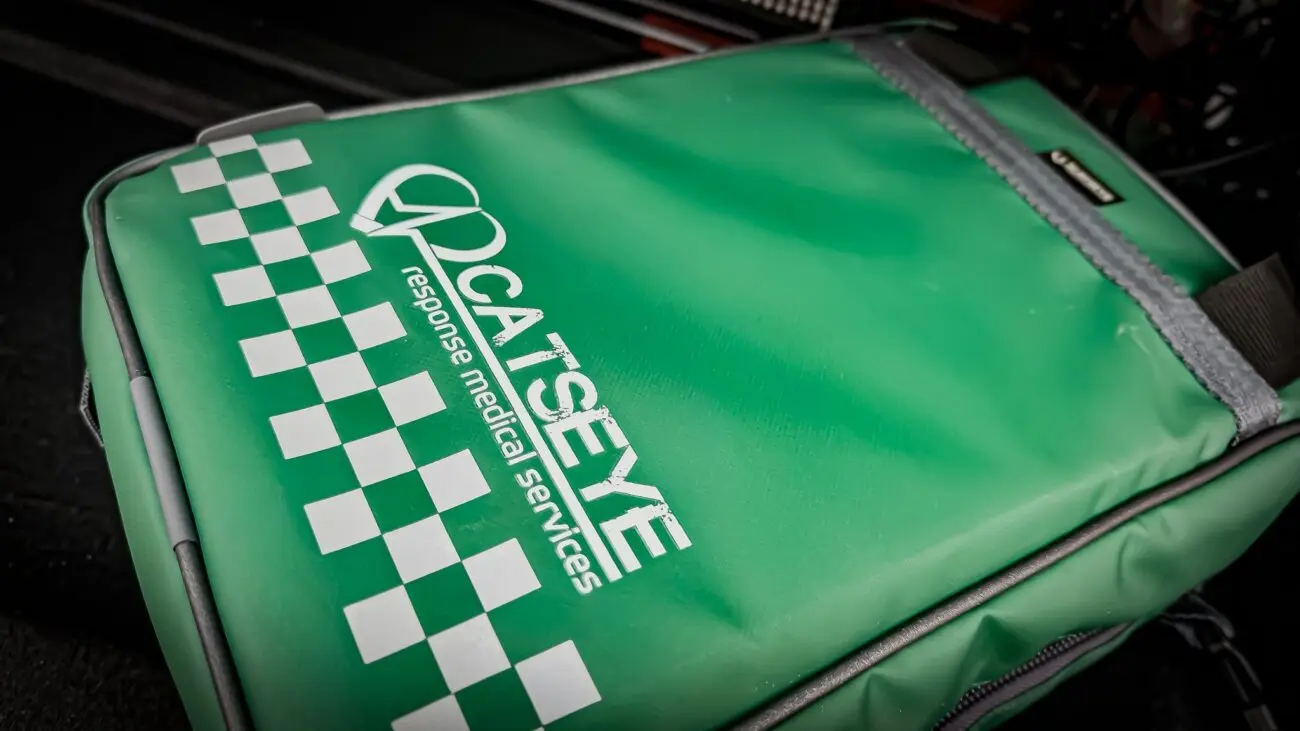
At Catseye Response Medical Services, we use Openhouse Products medical bags exclusively for our medical kits.
We choose these bags for their robust construction, build quality and features that support our infection prevention and control procedures.
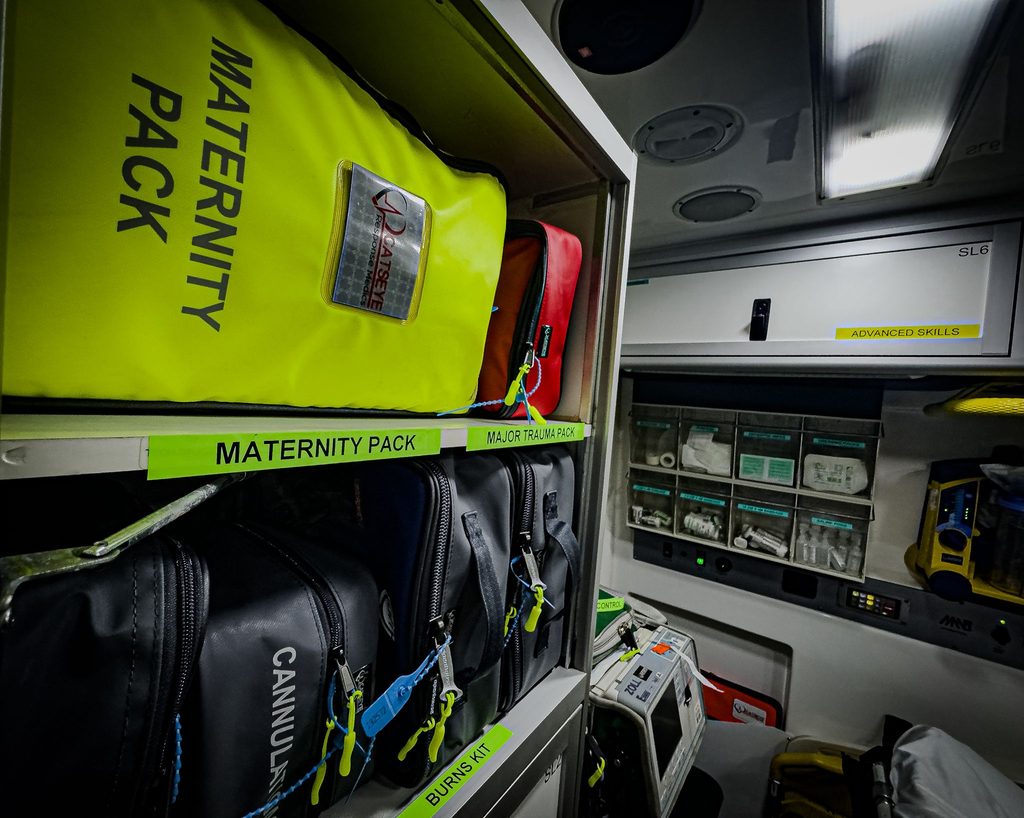
Our equipment organisation includes dedicated response bags, first aid supplies, patient monitoring equipment and major trauma kits.
Clearly organised medical bags help teams locate equipment efficiently and support routine checks and stock management.
Infection prevention equipment, such as gloves, protective clothing, disinfectants and appropriate clinical waste containers, is another important part of emergency medical provision.
7. Ambulances and Rapid Response Vehicles: What’s the Difference?
Different events require different medical response arrangements.
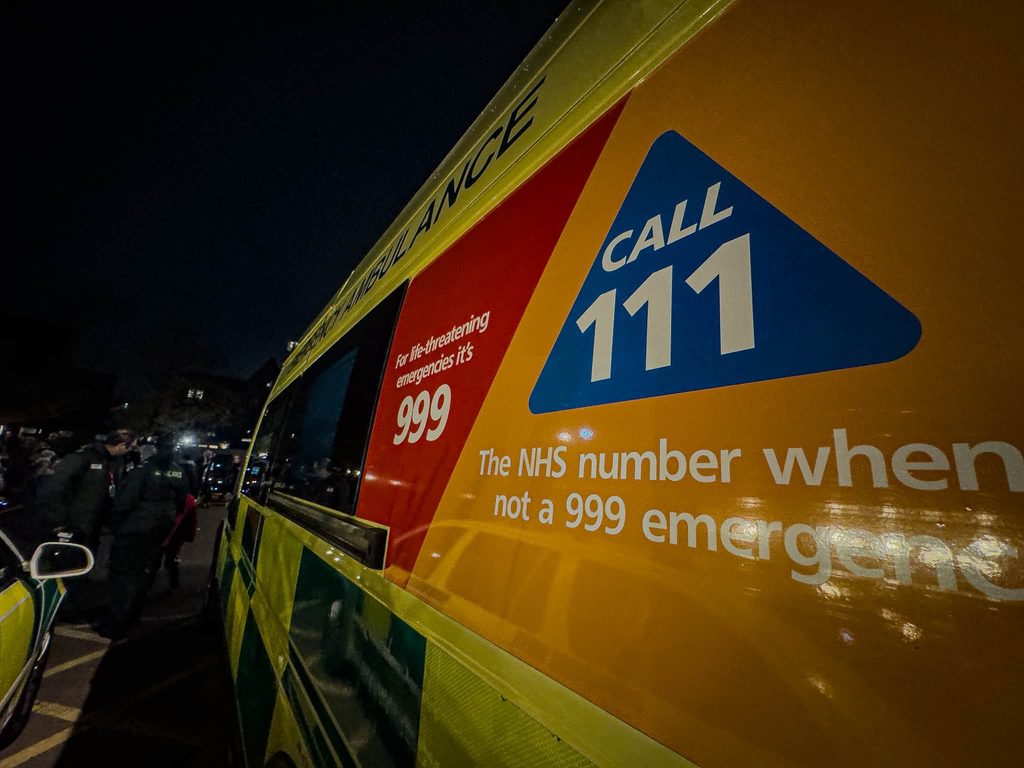
Ambulances provide a dedicated space for medical teams to assess and care for patients on site. Depending on their configuration and intended role, they may also support patient transportation.
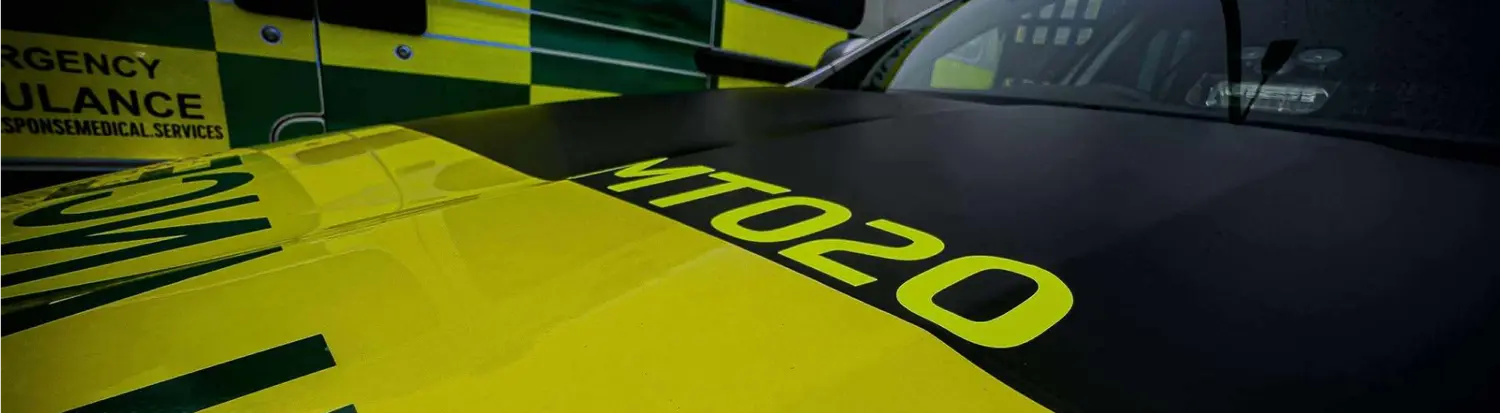
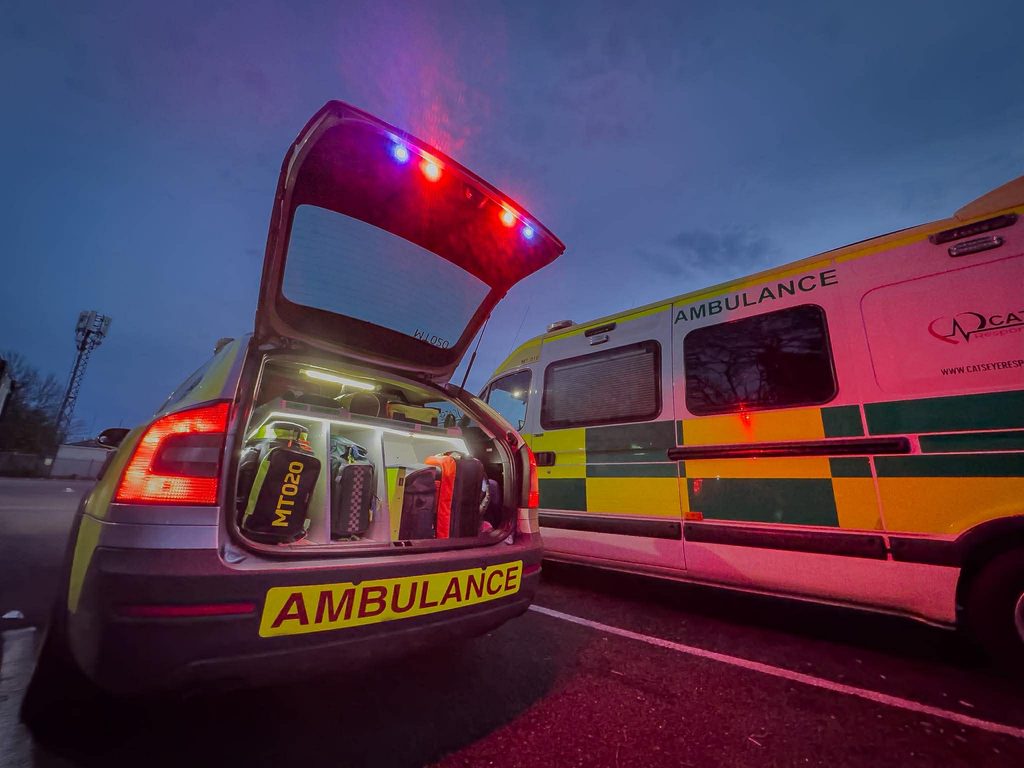
Rapid response vehicles (RRVs) enable medical personnel to bring equipment to incidents, particularly across large venues, outdoor locations and events covering extensive routes.
For example, at a running event, a rapid response vehicle may help medical personnel reach incidents along the course, while an ambulance can provide a dedicated treatment space at a suitable location.
The appropriate combination of personnel, vehicles and equipment depends on the event’s risk assessment and operational requirements.
8. Preparing Medical Equipment Before an Event
Professional medical cover involves more than arriving with a first aid kit.
Before an event, medical providers need to consider the activities taking place, expected attendance, location, access arrangements and potential medical risks.
Equipment preparation may involve checking supplies, confirming the availability of essential devices, reviewing kit contents and ensuring that equipment is appropriately stored.
At Catseye Response Medical Services, our event medical teams and response vehicles carry basic life support equipment and an AED as standard.
We discuss additional equipment, vehicle requirements and crew arrangements with event organisers to help determine suitable medical provision for their event.
Why Choose Catseye Response Medical Services?
Whether you’re organising a running race, athletics meeting, corporate function, motorsport event or community gathering, suitable medical provision should form part of your event planning.
Catseye Response Medical Services provides professional event medical support for organisers, businesses and communities across North West England and North Wales.
Our approach focuses on practical event planning, appropriately equipped medical teams and medical provision matched to the nature of the event.
We understand that no two events are identical, which is why discussing the venue, activities and expected attendance is an important first step.
Explore Our Ambulance Equipment
Want to see the equipment used by our medical teams?
We’ve created a dedicated equipment page showing examples of the medical equipment found in UK frontline ambulances, alongside photographs of our own vehicles, response bags, monitoring equipment and medical kits.
Explore Our Ambulance Equipment and Medical Kits
Need Professional Medical Cover for Your Next Event?
Planning a sporting event, corporate gathering, festival or community activity?
Catseye Response Medical Services can discuss your requirements and help you identify appropriate medical cover, equipment and vehicle arrangements.
Alternatively, contact our team:
Telephone: 01745 771716
Email: info@catseyeresponsemedical.services
Catseye Response Medical Services — Professional Event Medical Support Across North West England and North Wales.